
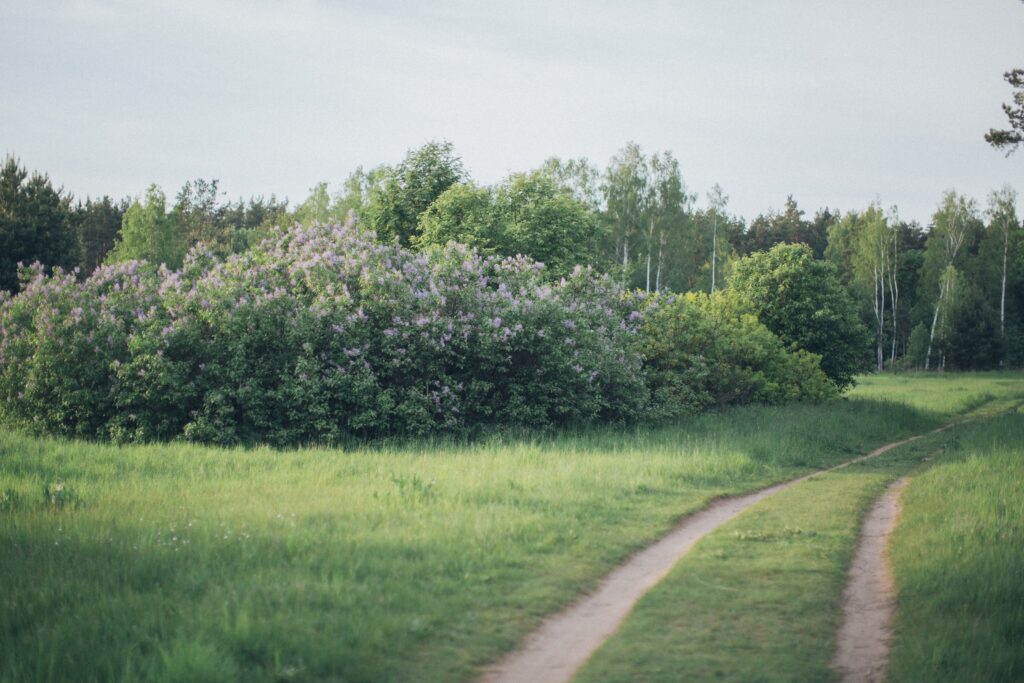
There are places where we seem to become a slightly different version of ourselves.
Maybe we talk more.
Maybe we are quieter.
Maybe we laugh more easily, stay longer, or find ourselves saying things we wouldn’t normally say.
Sometimes we notice it immediately.
Other times, we only realize it after leaving.
A certain café makes it easier to sit alone without feeling lonely. A particular friend’s house makes conversation feel effortless. A library makes it easier to concentrate.
Nothing about us has physically changed.
We walked into the same place as the person who walked out of it.
And yet, something about the environment made one version of us easier to access than another.
We tend to think of personality as something we carry with us.
Maybe it is more complicated than that.
We Don’t Act Exactly the Same Everywhere
Most of us have probably experienced the strange realization that we behave differently around different people or in different places.
Someone can be outgoing with friends and reserved in a classroom.
They can be confident at work and awkward at a family gathering.
They can spend hours talking in one setting and barely speak in another.
It can be tempting to decide that one version must be more authentic.
Maybe the quiet version is the “real” person.
Maybe the outgoing version is.
But perhaps neither explanation is quite right.
Human behavior is responsive to context.
We are constantly noticing small signals about where we are, who is around us, what is expected, and how much freedom we have to act.
A classroom communicates something different from a living room.
A doctor’s office communicates something different from a friend’s kitchen.
A crowded train communicates something different from an empty park.
We don’t consciously read all of these signals.
But we respond to them anyway.
Some Places Tell Us How to Behave
Every environment carries expectations, even when nobody says them out loud.
A library is quiet.
A waiting room is subdued.
A party is social.
A classroom asks us to pay attention.
A workplace has its own rhythms and rules.
Even places without formal rules can make certain behaviors feel more natural than others.
We may lower our voice when we enter a quiet building without anyone asking us to.
We may instinctively make conversation with someone sitting beside us at a gathering, even if we would never approach a stranger in a grocery store.
We may feel comfortable lingering in one place and strangely aware of ourselves in another.
The environment is giving us information.
Not necessarily instructions.
Just cues.
And those cues can influence what we do before we ever consciously decide how we want to behave.
Familiarity Can Make Room for More of Us
Some places feel easier simply because we know what to expect.
We know where to sit.
We know what the room sounds like.
We know who might be there.
We know how long we’re likely to stay.
Because fewer things feel uncertain, we may have more attention available for everything else.
This can happen in very ordinary places.
A favorite coffee shop.
A relative’s kitchen.
The route we walk every morning.
A particular corner of a library.
A friend’s car.
The place itself may not be extraordinary.
But familiarity gives it a kind of ease.
We don’t have to figure out how to be there.
We already know.
And when we aren’t spending energy figuring out where we fit within an environment, we may have more room to simply exist in it.
Some Places Give Us Permission to Be Quiet
There is also something comforting about places where silence doesn’t need to be explained.
Some environments make quietness feel natural.
A library does.
A long car ride can.
Sitting beside someone who is comfortable with silence can feel very different from sitting beside someone who seems to expect constant conversation.
The difference isn’t necessarily in how much we have to say.
It may be in how much we feel we have to perform.
There is a particular kind of freedom in not having to fill every empty space.
We can think.
Look outside.
Listen.
Do nothing for a few minutes.
And nobody interprets the silence as a problem.
Sometimes a place feels comfortable not because it brings out our most expressive selves, but because it allows us not to perform at all.
Other Places Bring Out More of Us
The opposite can happen too.
Some environments seem to make us more talkative or adventurous.
Maybe it is a group of friends where everyone knows each other’s humor.
Maybe it is a place where we have had good experiences before.
Maybe it is simply somewhere we don’t feel particularly observed.
We might tell stories we wouldn’t normally tell.
Laugh louder.
Try something new.
Stay out later than planned.
The setting hasn’t given us a new personality.
It has simply lowered some of the barriers that were keeping certain parts of our personality quieter.
That distinction matters.
Sometimes we don’t become a different person in a particular place.
We become less restrained.
The Feeling of Being Observed
One of the strongest influences an environment can have is the sense that other people are watching.
Sometimes they actually are.
Often, they probably aren’t paying nearly as much attention as we imagine.
But the feeling can still affect us.
We might become more aware of how we sit, speak, dress, move, or respond.
A room full of unfamiliar people can make us more self-conscious than a room full of people we know.
A familiar place can feel liberating partly because we don’t have to spend as much energy wondering how we are being perceived.
This may be one reason certain environments make us feel more like ourselves.
Not because they contain some magical quality that reveals our “true personality,” but because they require less monitoring.
We don’t have to watch ourselves as closely.
And when we stop watching ourselves, we may behave more naturally.
A Place Can Hold a Version of Us
Sometimes a place becomes associated with a particular version of who we were.
A childhood bedroom.
A school hallway.
A first apartment.
A favorite restaurant.
A particular park.
Returning to one of these places can feel strange because the environment may be familiar while the person entering it has changed.
We remember how we used to behave there.
What we cared about.
Who we were with.
What we expected from the future.
The place can almost feel like a container for an earlier version of ourselves.
And sometimes we realize that we don’t quite fit inside it anymore.
Not necessarily because anything is wrong.
Simply because we changed.
The Same Place Can Feel Different With Different People
Even a place isn’t always the same place psychologically.
A restaurant can feel completely different depending on who is sitting across the table.
A living room can feel lively with one group and uncomfortable with another.
A city can feel exciting when we’re visiting and exhausting when we’re living there.
The physical environment remains almost identical.
The experience does not.
This is one reason it can be difficult to explain why we like certain places.
Someone else might visit and feel nothing special.
We might love it.
Part of what we are responding to may not be the place itself.
It may be the version of ourselves that tends to exist there.
A place can become associated with freedom, comfort, curiosity, connection, or even relief.
We aren’t simply returning to a location.
We’re returning to a particular way of feeling.
Does That Mean One Version Is More “Real”?
Maybe this is where the idea becomes complicated.
If we are different in different environments, it is tempting to ask which version is the real one.
The quiet person.
The talkative person.
The serious person.
The silly person.
The confident person.
The cautious person.
But perhaps asking which one is real assumes that people are supposed to have only one version.
We don’t.
A person can be both quiet and talkative.
Both cautious and adventurous.
Both serious and playful.
Both independent and deeply connected to other people.
Different situations simply make different qualities more available.
The person who speaks very little in one room may be the same person who talks for hours in another.
Neither behavior cancels out the other.
Context doesn’t necessarily reveal a false self and a true self.
It reveals different parts of the same self.
Maybe Comfort Is About What We Don’t Have to Do
When we say a place feels comfortable, we often describe what happens there.
We relax.
We laugh.
We talk.
We focus.
But comfort can also come from what we don’t have to do.
We don’t have to explain ourselves.
We don’t have to fill the silence.
We don’t have to wonder where to sit.
We don’t have to monitor every reaction.
We don’t have to figure out what is expected.
We don’t have to become particularly impressive.
We can simply be there.
Perhaps that is one of the quietest forms of comfort.
Not a place that demands nothing from us, but a place where the things it asks of us feel natural.
The Places We Return To
Over time, we often develop places that feel like extensions of our routines.
We know which seat we prefer.
We know what time is usually quiet.
We know which entrance to use.
We know what we like to order.
We know who we might see.
These details may seem insignificant.
But they create continuity.
We don’t have to begin from the beginning every time.
We already have a relationship with the place.
And perhaps that is part of what makes somewhere feel like ours.
Not ownership.
Recognition.
The feeling that the place knows something about how we move through it, even though a place cannot literally know us.
We Carry Ourselves Everywhere, But Not in the Same Way
It is easy to imagine that we bring our personalities into every room unchanged.
But our surroundings are constantly interacting with us.
They influence how much attention we have.
How observed we feel.
What behavior seems appropriate.
How much uncertainty we experience.
What memories come to mind.
What we expect from ourselves.
This doesn’t mean our environment controls who we are.
It simply means that who we are and where we are are not completely separate.
Sometimes the right environment doesn’t transform us.
It makes something easier.
Easier to speak.
Easier to think.
Easier to laugh.
Easier to be quiet.
Easier to try.
Easier to rest.
And perhaps that is why certain places matter to us more than we can explain.
We may think we love the place because of how it looks, what it offers, or what we do there.
But sometimes we love a place because of who we get to be when we’re there.
Maybe there isn’t one version of ourselves waiting to be discovered somewhere.
Maybe we are made up of many real versions, each brought forward by different people, places, memories, and circumstances.
The quiet version is real.
The talkative version is real.
The serious version is real.
The playful one is too.
Some places simply make certain parts easier to reach.
And perhaps the places that matter most aren’t always the ones that change us.
They’re the ones where, for a little while, we don’t have to work so hard to be ourselves.