
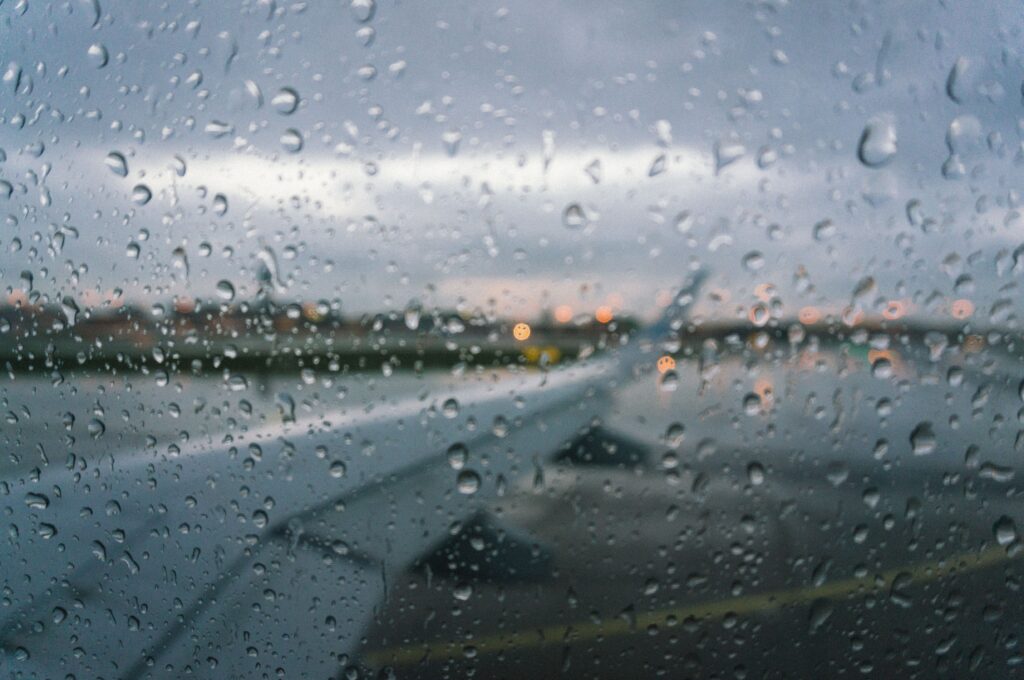
Waiting is often described as the time between one event and the next.
We wait for a text message, an interview result, a doctor’s appointment, a friend to arrive, graduation, or the beginning of a long-awaited trip. On the surface, waiting can seem uneventful, almost as though life has temporarily paused until something finally happens.
Yet waiting rarely feels empty.
Even when nothing around us appears to be changing, something is almost always happening within us. Our thoughts become busier. We imagine different possibilities, replay conversations, predict outcomes, and search for signs that the future might already be revealing itself. A few hours can feel surprisingly long, while a few weeks may seem impossible to measure. The event itself has not yet arrived, but our minds have already begun responding to it.
Perhaps this is why waiting can feel so emotionally complex.
It is not simply about passing time. It is about living in a space where the future feels close enough to imagine but still far enough that we cannot reach it. We know something is coming, yet we do not know exactly when, how, or what it will bring.
In many ways, waiting is one of the most familiar experiences we share.
It appears throughout our lives in countless forms, from childhood excitement before birthdays to the uncertainty of adulthood, where we often find ourselves waiting for answers, opportunities, recovery, or change. The circumstances may differ, but the experience itself remains surprisingly similar.
Perhaps waiting feels so significant because it asks us to live with something many of us naturally find difficult:
Not knowing what comes next.
Waiting Is More Than the Absence of Action
It is easy to think of waiting as something passive.
After all, we often associate progress with movement. We picture ourselves solving problems, making decisions, or taking the next step toward a goal. Waiting, by comparison, can feel like standing still.
Psychologically, however, waiting is rarely inactive.
Even while our circumstances remain unchanged, our minds continue working. We imagine conversations that have not happened yet. We picture different outcomes, sometimes hopeful and sometimes disappointing. We rehearse what we might say if things go well and what we might do if they do not. Without realizing it, we begin living parts of the future before it has even arrived.
This is not necessarily a sign that something is wrong.
Our minds naturally try to prepare for uncertainty. Thinking ahead helps us anticipate possibilities, solve potential problems, and reduce the discomfort of not knowing. In many situations, this ability serves us well.
The challenge is that preparation has its limits.
There comes a point when no amount of thinking can produce information that simply does not yet exist. The interview has not been evaluated. The medical test has not been reviewed. The message has not been sent. The decision has not yet been made.
The future continues moving at its own pace, regardless of how much we try to reach it early.
Why Uncertainty Makes Waiting Feel So Different
Not all waiting feels the same.
Waiting in line for a cup of coffee rarely feels like waiting for important news. We may spend the same amount of time doing both, yet the emotional experience is completely different.
The difference often lies in uncertainty.
When we know exactly what will happen and approximately when it will happen, waiting becomes easier to tolerate. We can estimate how much longer we have, and our minds are able to settle into that expectation.
Uncertainty changes the experience entirely.
Instead of waiting for something predictable, we begin waiting for possibilities. We wonder which outcome will become reality, when we will finally know, and whether we are prepared for whatever comes next. Our attention naturally returns to the unanswered question because unanswered questions have a way of remaining mentally unfinished.
This is one reason waiting can make time feel strangely inconsistent.
A single afternoon spent anticipating an important phone call can feel much longer than an ordinary afternoon filled with routine activities. It is not because the clock has slowed down. Rather, our attention keeps returning to what we are waiting for, making us more aware of each passing moment.
Time itself has not changed.
Our experience of it has.
What Waiting Quietly Changes
Although we often think of waiting as something that happens before life resumes, waiting is already part of life.
Some of our most meaningful experiences take place during periods of uncertainty. We finish one chapter before the next has begun. We leave one job before starting another. We submit an application without knowing the outcome. We begin healing without knowing how long it will take. Looking back, we may remember these times as periods of waiting, but while we were living them, they were simply our lives unfolding one day at a time.
This is easy to forget because waiting has a way of directing our attention toward what has not yet happened.
Our thoughts drift toward tomorrow instead of today. We imagine the conversation we have not had, the answer we have not received, or the opportunity we hope is just around the corner. Without realizing it, we can begin treating the present as though it is merely a bridge to something more important.
Yet life rarely works that way.
The days we spend waiting are not empty spaces between meaningful moments. They become meaningful moments themselves. We continue learning, growing, meeting people, changing our perspectives, and building memories even while we are looking ahead.
Sometimes we only recognize this in hindsight.
A period we once described as “just waiting” later becomes the time we developed a new friendship, discovered a new interest, or quietly became more resilient than we realized. What felt like a pause was, in many ways, another chapter of the story.
The Time Between Knowing
One of the most difficult parts of waiting is not simply that we do not have an answer.
It is that our minds naturally want one.
Human beings are remarkably good at finding patterns and making sense of the world around us. We like to understand what is happening, why it is happening, and what is likely to happen next. Waiting temporarily interrupts that process. We know enough to recognize that something important is coming, but not enough to understand how it will unfold.
In response, our minds often begin filling the space with possibilities.
Sometimes we imagine the outcome we hope for. Other times we prepare ourselves for disappointment. Many of us move back and forth between both, trying to feel ready regardless of what eventually happens.
This is a deeply human response.
When the future feels uncertain, imagining different possibilities can create a sense of preparation, even if those possibilities never occur. It allows us to feel as though we are doing something while circumstances remain outside our control.
Eventually, however, every period of waiting reaches the same quiet realization.
There comes a point where no amount of imagining can bring tomorrow any closer.
Some answers simply arrive in their own time.
Living in the Space Between
Perhaps this is what makes waiting such a unique psychological experience.
It reminds us that not every part of life can be planned, predicted, or rushed. Some moments ask us to move forward with confidence. Others ask us to remain patient while events unfold beyond our control.
Neither is necessarily easier than the other.
In many ways, waiting invites a different kind of growth. Not the dramatic kind that announces itself through major milestones, but the quieter kind that develops while we continue living despite not having all the answers. We learn that uncertainty does not prevent life from moving forward. We continue having conversations, forming relationships, learning new things, and discovering parts of ourselves even while important questions remain unanswered.
Looking back, we often realize that the waiting itself changed us.
Not because the uncertainty was enjoyable, but because it taught us something about how we respond when certainty is unavailable. It revealed what we value, what we hope for, and sometimes how much we are capable of carrying without immediately knowing the outcome.
Perhaps waiting is never really about standing still.
Perhaps it is about learning to live in the space between what we know and what we have yet to discover.
That space can feel uncomfortable. It can test our patience, challenge our expectations, and make time seem to move differently than it usually does.
But it is also where much of life quietly unfolds.
We often think our lives are made up of the moments when something finally happens: the acceptance letter arrives, the phone rings, the results appear, the reunion begins. Those moments certainly matter.
Yet so do the days before them.
Because while we are waiting for life to happen, life has never actually stopped happening at all.